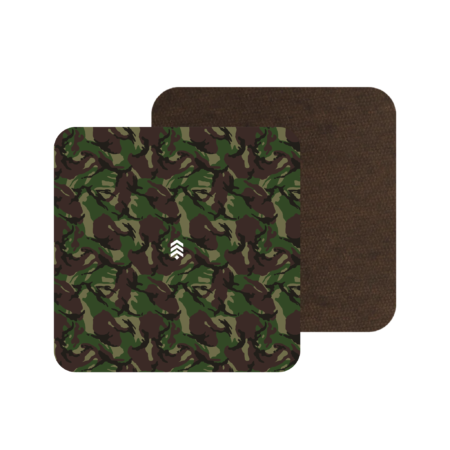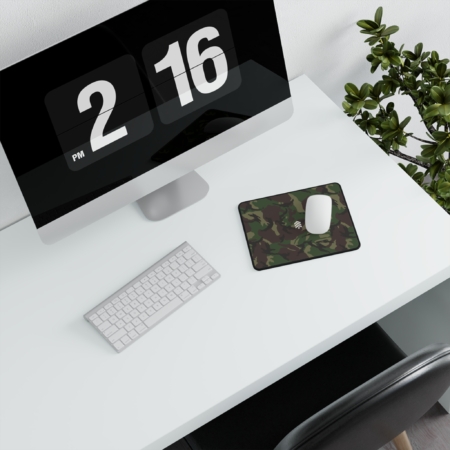
Every collection has to begin somewhere. So we began with The Queen’s Plaid.
For us, there was only one place to start: British Disruptive Pattern Material, more commonly known as DPM, which is one of the most recognisable camouflage patterns ever produced and the first camouflage pattern uniform to be universally issued to a national army.
Functional, unmistakable, and deeply woven into British military history, it represents the meeting point of purposeful design and lasting cultural influence.
History
Originally developed during the 1960s, British DPM evolved from camouflage research carried out in the years following the Second World War. The aim was simple. Create a pattern that broke up the human silhouette in the woodlands of Northern and Central Europe while remaining practical to manufacture and issue at scale.
The result was a distinctive four-colour arrangement of black, dark brown, olive green and sand. Rather than attempting to imitate leaves or branches, the bold brushstroke shapes disrupted the outline of the wearer at distance. It was a practical solution that proved remarkably effective and became standard issue across the British Armed Forces for decades.
From the Falklands to Northern Ireland, the Gulf War and peacekeeping operations across the world, British DPM became the defining uniform of a generation of British servicemen and women. Few camouflage patterns have been worn across such a broad range of climates, conflicts and training environments while remaining instantly recognisable.
Fashion meets function
Its influence did not end with military service. Like many pieces of military equipment, DPM gradually found a second life beyond its original purpose. Surplus clothing became common in outdoor pursuits, workwear and everyday fashion. Designers and artists embraced its distinctive palette and graphic quality, often using camouflage to explore themes of identity, conflict, utility and subculture.
British DPM appeared on fashion runways, in album artwork, in skate culture and streetwear, and across contemporary art. It became more than a functional pattern. It became a visual language, recognised by people who had never worn a uniform but appreciated its history, character and uncompromising design.
Why DPM?
That enduring appeal is what drew us to it. We are fascinated by objects that were designed with a clear purpose, then went on to become cultural icons in their own right. British DPM embodies that journey. It is functional without being ordinary, familiar without feeling overused, and unmistakably British.
Our first collection is a celebration of that legacy. Not a reproduction of military equipment, but a respectful reinterpretation of one of Britain’s most iconic design achievements. It marks the beginning of a series exploring camouflage patterns that have shaped military history, influenced design, and earned a place far beyond the environments they were created for.
Buy your slice of history now.